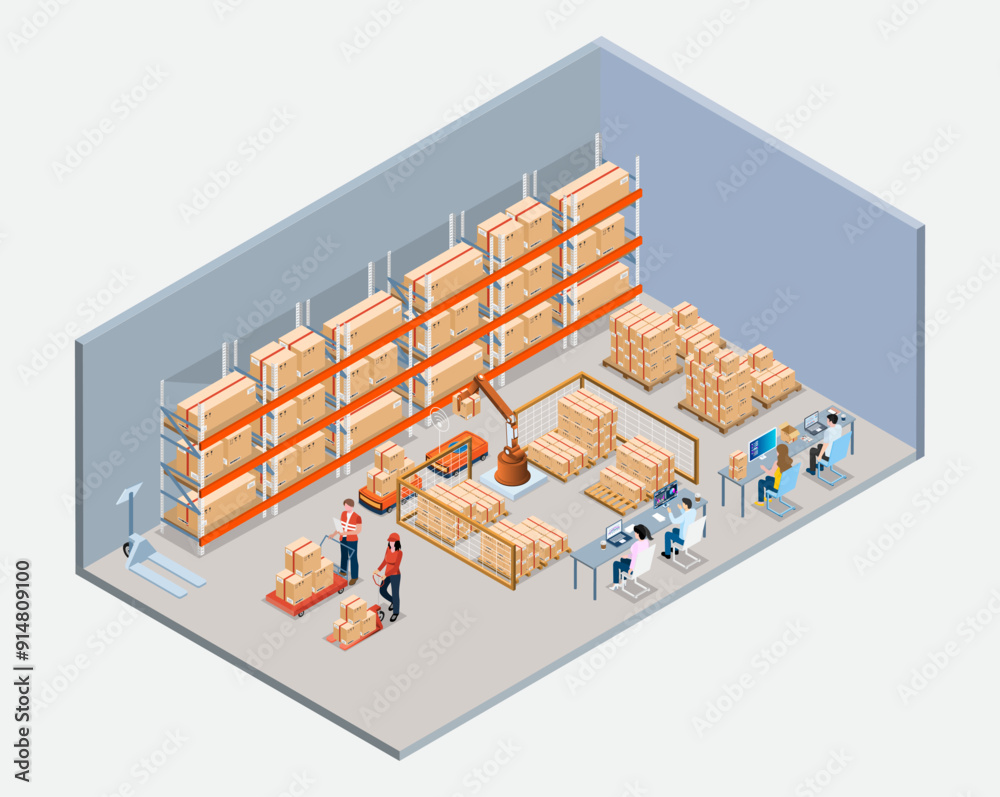
Automated Guided Vehicles (AGVs) and Autonomous Mobile Robots (AMRs) concept.

Automated Guided Vehicles: Revolutionizing Industrial Logistics
In today's fast-paced industrial landscape, efficiency and precision are paramount. Enter Automated Guided Vehicles (AGVs) - the unsung heroes of modern warehouses, factories, and distribution centers. These intelligent machines are transforming the way businesses handle material transport, streamlining operations, and boosting productivity.
What Are Automated Guided Vehicles?
AGVs are robotic transport systems that navigate autonomously through facilities, carrying materials, products, or equipment without human intervention. These versatile machines use various technologies to guide their movement, including magnetic strips, lasers, vision systems, or a combination of these methods.
Key Benefits of AGVs
1. Increased Efficiency: AGVs operate 24/7 without fatigue, significantly reducing downtime and increasing overall productivity.
2. Enhanced Safety: By minimizing human involvement in potentially dangerous material handling tasks, AGVs drastically reduce workplace accidents.
3. Cost Reduction: While initial investment may be substantial, AGVs offer long-term cost savings through reduced labor expenses and increased operational efficiency.
4. Improved Accuracy: AGVs follow precise pathways and schedules, ensuring consistent and error-free material handling.
5. Scalability: As business needs grow, AGV systems can be easily expanded or reconfigured to accommodate changing requirements.
Types of AGVs
1. Towing AGVs: These vehicles pull trailers or carts, ideal for transporting heavy loads over long distances.
2. Unit Load AGVs: Designed to carry a single load on their platform, perfect for pallet transport.
3. Forklift AGVs: Equipped with lifting mechanisms, these AGVs can handle tasks traditionally performed by human-operated forklifts.
4. Assembly Line AGVs: Specialized vehicles that move products through various stages of assembly.
5. Custom AGVs: Tailored solutions designed for specific industry needs or unique operational requirements.
Industries Benefiting from AGVs
- Manufacturing
- Automotive
- Pharmaceuticals
- Food and Beverage
- E-commerce and Retail
- Aerospace
- Healthcare
Implementing AGVs: Considerations and Challenges
While AGVs offer numerous advantages, successful implementation requires careful planning:
1. Facility Layout: The existing infrastructure may need modifications to accommodate AGV pathways and charging stations.
2. Integration: AGVs must seamlessly integrate with existing warehouse management systems and other automation technologies.
3. Training: Staff need proper training to work alongside AGVs and maintain the systems.
4. Initial Investment: The upfront cost of AGVs can be significant, requiring a thorough cost-benefit analysis.
5. Flexibility: As business needs evolve, the AGV system should be adaptable to changing requirements.
The Future of AGVs
As technology advances, we can expect to see even more sophisticated AGVs:
1. AI and Machine Learning: Enhanced decision-making capabilities and predictive maintenance.
2. 5G Integration: Improved communication and real-time data processing.
3. Advanced Sensors: Better obstacle detection and navigation in dynamic environments.
4. Collaborative Robots: AGVs working in tandem with human workers for optimal efficiency.
Conclusion
Automated Guided Vehicles represent a significant leap forward in industrial automation. By enhancing efficiency, safety, and accuracy, AGVs are not just transforming current operations but are paving the way for the smart factories of the future. As technology continues to evolve, the potential applications for AGVs are bound to expand, making them an invaluable asset for businesses aiming to stay competitive in an increasingly automated world.